ケツの穴からクソが漏れ出してる!

About Worms dot Fun 🙂

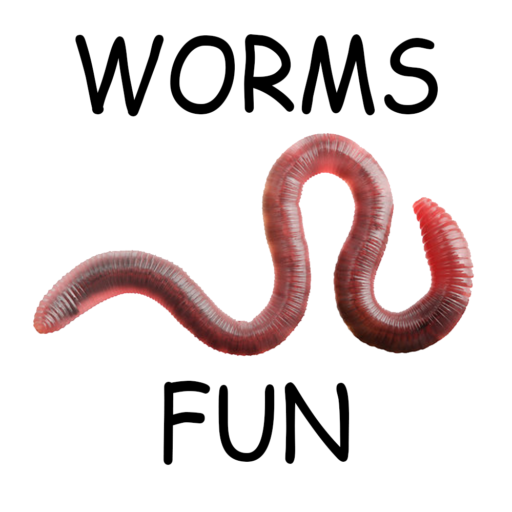
Earthworms belong to the phylum Annelida (segmented worms) and are invertebrates with no backbone. Their bodies consist of many ring-like segments called annuli, typically 100–150 per worm, each with its own muscles for movement. Small bristles called setae on each segment help worms grip surfaces as they stretch and contract to burrow or move. Earthworms have no eyes, ears, or teeth, but they possess light-sensitive receptor cells, especially at the front end, and are highly sensitive to vibrations. They breathe through their moist skin via diffusion; dry conditions can suffocate them, which is why they often surface after rain. Worms are hermaphrodites, possessing both male and female reproductive organs, though they usually need a partner to reproduce. During mating, two worms align in opposite directions, join at their clitella (swollen bands), exchange sperm, and each later produces a cocoon with fertilized eggs. Baby worms hatch from tiny cocoons (smaller than a grain of rice), rather than being born live. Earthworms can regenerate lost segments, like a tail, though regrowing a head is rarer and depends on the species and injury location. They lack lungs or a complex brain but have a simple one near their organs that controls basic senses and movement. Earthworms have five pairs of aortic arches that function like hearts, pumping blood through their bodies; their blood contains hemoglobin and is red. They are cold-blooded and cannot regulate their own body temperature. A single earthworm can eat up to one-third of its body weight in organic matter per day. In good soil, there can be over a million earthworms per acre—sometimes their total weight exceeds that of livestock on the surface. Charles Darwin called earthworms “nature’s ploughs” for their role in mixing and aerating soil. Their tunnels improve soil structure, allowing better water infiltration and root growth for plants. Worm castings (poop) are rich in nutrients and act as excellent natural fertilizer. Earthworms grind food in a muscular gizzard using ingested grit or tiny rocks, since they have no teeth; they have strong, muscly mouths instead. They are scavengers that eat decaying vegetation, leaf litter, fungi, microbes, and sometimes tiny rocks with organic matter on them. Some species, like red wigglers used in composting, can process 25–35% of their body weight daily in organic waste. There are roughly 2,700–9,000 described species of earthworms worldwide, with estimates varying due to ongoing discoveries and species complexes. Earthworms vary greatly in size: most are a few inches long, but the Giant Gippsland earthworm of Australia can reach 12 feet and weigh over a pound. The longest recorded earthworm was a 22-foot specimen found in South Africa in 1967 (a microchaetid species, sometimes cited as up to 6.7 meters). Some earthworms, like jumping worms (Amynthas species), thrash wildly or shed tails when disturbed—earning nicknames like “crazy worms.” Certain New Zealand earthworms produce bioluminescent mucus that glows orange-yellow when threatened, squirting it from pores as a defense. Worms can aestivate (enter a dormant, knotted state with mucus protection) during droughts or cold to survive. They sense light and usually avoid it to prevent drying out; prolonged exposure can paralyze them. Earthworms are a vital food source for birds, hedgehogs, frogs, toads, and other animals. Fossils of annelid worms date back about 514 million years, showing their ancient evolutionary history. Not all “worms” are earthworms: the broader category includes roundworms (Nematoda, with ~28,500 species) and flatworms (Platyhelminthes). Marine annelids (polychaetes) number around 14,000 known species, with many more undiscovered in ocean habitats from shallows to deep sea. Some marine worms, like the “sand-striker” or bobbit worm, have powerful jaws and can prey on fish. Horsehair worms (Nematomorpha) can manipulate host insects (like crickets) to jump into water, allowing the worm to emerge and reproduce. Velvet worms (Onychophora, sometimes called “walking worms”) have stubby legs, shoot sticky slime to catch prey, and breathe through tracheal pores. Parasitic worms (helminths) infect about 1.5 billion people globally, often via soil-transmitted routes, causing issues like anemia or organ damage. Some parasitic worms from pets (dogs/cats), such as certain roundworms or hookworms, can zoonotically infect humans, especially children via contaminated soil. Toxocara roundworms from dogs/cats can migrate in human tissues, potentially affecting eyes or causing other symptoms if eggs are ingested. Worms play key roles as decomposers, breaking down organic matter and recycling nutrients in ecosystems. In vermicomposting, species like Eisenia fetida (red wigglers) turn kitchen scraps into nutrient-rich castings efficiently. Worms have no arms or legs—their streamlined, segmented body is an adaptation for burrowing through tight spaces. They exude a lubricating mucus that aids movement and keeps skin moist; some species’ mucus is even toxic to certain bacteria. Earthworms can pull surface leaves or debris down into burrows, further enriching soil layers. Some species are epigeic (surface-dwellers), endogeic (soil-mixers), or anecic (deep-burrowers that pull organics down). Jumping worms reproduce parthenogenetically (without mating) in some cases and rapidly alter forest soils into dry, granular material. Worms are sensitive to soil quality; poor soils support fewer (e.g., ~250,000 per acre), while rich farmland can host up to 1.75 million. Ancient “worm charming” or grunting techniques use vibrations (mimicking predators like moles) to bring worms to the surface. Some polychaete worms in the ocean can regenerate entire bodies or reproduce by detaching “zombie” tail segments with eggs/sperm and new heads. Earthworms help bury objects over time through their casting and tunneling—Darwin studied this extensively. Their dry body weight is about two-thirds protein, making them a potential (though niche) food source in some cultures. Worms are found on every continent except Antarctica and in diverse habitats, from soil and logs to tree epiphytes and deep ocean floors—demonstrating incredible adaptability.